Understanding Stroke Types, Causes, and Why Time Matters
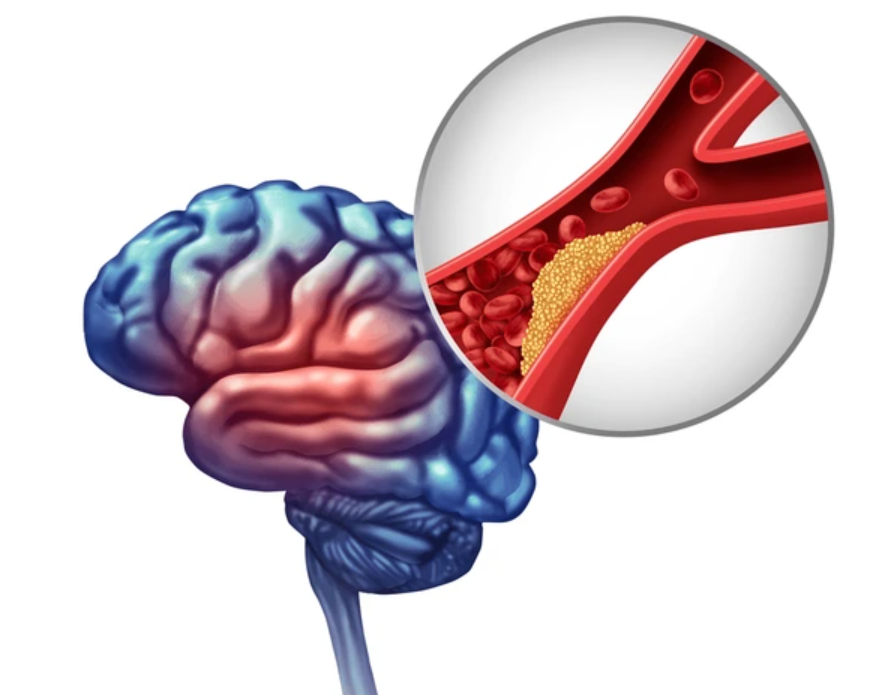
A stroke happens when the blood supply to part of the brain is interrupted. Brain cells need a constant flow of blood to bring them oxygen and nutrients, and when that flow is cut off, the affected area of the brain begins to be harmed within minutes. Because different parts of the brain control different functions, the effects of a stroke depend on which area is involved. There are a few different types, and understanding them helps explain why stroke is always treated as an emergency.
Types of Stroke:
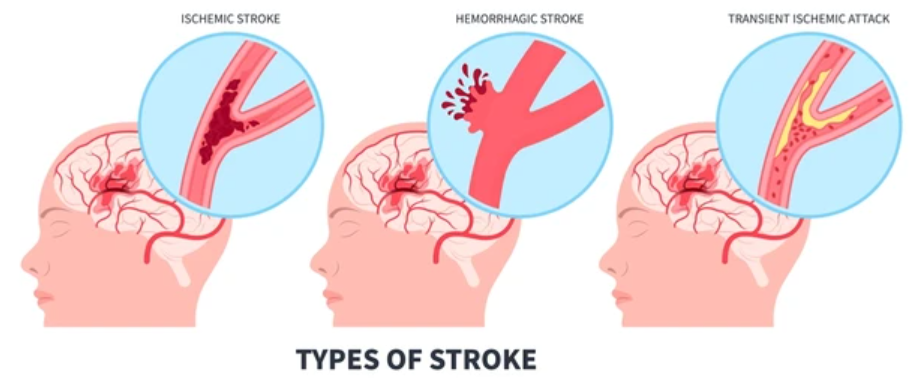
This is the most common type, accounting for around 80 percent of strokes. It occurs when a blood clot or a build-up of fatty deposits blocks an artery supplying the brain, cutting off the flow to the area beyond the blockage.
This type occurs when a blood vessel in or around the brain ruptures and bleeds. It is less common than ischemic stroke but tends to be more severe, because the bleeding both deprives nearby tissue of normal blood flow and puts pressure on the brain.
TIA — transient ischemic attack (mini stroke)
A TIA is caused by a temporary blockage of blood flow to the brain. The symptoms are similar to a stroke but pass within a short time and leave no lasting damage. A TIA should never be ignored — it is an important warning sign that a full stroke could follow, and it needs prompt medical assessment.
Recognising a stroke — BE-FAST
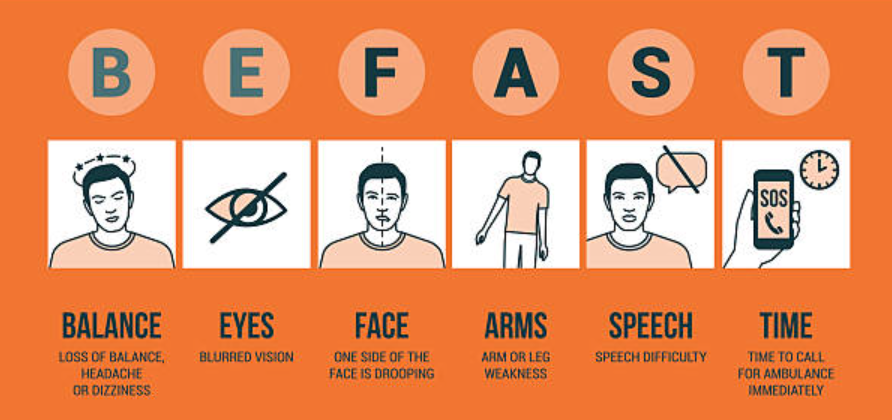
BE-FAST is a simple way to remember the main warning signs of a stroke. Recognising even one of these signs and acting quickly can make a real difference.
|
B |
Balance — sudden loss of balance A sudden loss of balance or coordination, or unexplained dizziness. |
|
E |
Eyes — sudden vision changes Sudden trouble seeing in one or both eyes, or double vision. |
|
F |
Face drooping — one side of the face One side of the face droops or feels numb; the smile may appear uneven. |
|
A |
Arm weakness — one arm drifting down Weakness or numbness in one arm; when both arms are raised, one drifts downward. |
|
S |
Speech — slurred or strange Speech becomes slurred, hard to understand, or the person cannot find the right words. |
|
T |
Time — call emergency services immediately If any of these signs appear, note the time they started and seek emergency care without delay. |
Why the first few hours are critical
During a stroke, brain tissue is affected very quickly once its blood supply is interrupted. The sooner blood flow can be restored, the more brain tissue may be protected. This is why stroke care is built around acting fast, and why certain treatments are only possible within specific time windows.
The 4.5-hour window for clot-dissolving treatment
For many ischemic strokes, a clot-dissolving medicine known as thrombolysis (often called tPA) can be given to help break down the clot blocking the artery. To be effective and safe, it generally needs to be given within about four and a half hours of symptoms starting, which is why reaching hospital quickly matters so much.
The 24-hour window for mechanical thrombectomy
For certain strokes caused by a blockage in a larger artery, a procedure called mechanical thrombectomy may be used to physically remove the clot. In suitable cases this can sometimes be carried out up to 24 hours after symptoms begin, although earlier is generally better. Whether it is appropriate depends on the individual situation and is decided by the treating team. This information is provided to explain how stroke care works, not as a recommendation for any particular case.
Who is at higher risk of stroke?
Some factors raise the likelihood of having a stroke. Many of them can be managed, which is why awareness is useful.
High blood pressure — the leading cause
Persistently raised blood pressure is the single most important risk factor for stroke. Over time it damages and weakens blood vessels throughout the body, including those supplying the brain.
Diabetes and high cholesterol
Both diabetes and raised cholesterol contribute to the narrowing and damage of blood vessels, increasing the chance of a blockage.
Atrial fibrillation (irregular heartbeat)
This common irregular heart rhythm can allow blood clots to form in the heart, which may then travel to the brain and cause a stroke.
Smoking and sedentary lifestyle
Smoking damages blood vessels and makes clots more likely, while a lack of physical activity contributes to several other risk factors.
Previous TIA or stroke history
Having already had a TIA or stroke increases the risk of another, which makes follow-up and prevention especially important.
How stroke is diagnosed
When a stroke is suspected, imaging is carried out urgently to confirm what is happening and to guide treatment.
CT scan — first-line investigation in emergency
A CT scan is usually the first test performed. It is quick and helps tell whether a stroke is caused by a blockage or by bleeding — an essential distinction, because the two are treated very differently.
MRI with diffusion sequences — detecting early ischemic changes
MRI can detect changes from an ischemic stroke very early, sometimes before they are visible on a CT scan, and can show the extent of the affected area in detail.
CT/MR angiography — identifying blocked or narrowed vessels
These scans map the blood vessels of the brain and neck to pinpoint where an artery is blocked or narrowed, which helps the team decide on the right approach.
ASPECTS scoring — assessing extent of brain involvement
ASPECTS is a scoring system used on the scan images to estimate how much of the brain has been affected. It helps guide treatment decisions in a consistent way.
How stroke is treated
Treatment depends on the type of stroke, how much time has passed, and the person’s overall condition. The approaches below are described for understanding only; decisions are always made by the treating team for each individual.
Intravenous thrombolysis (tPA)
A clot-dissolving medicine given through a vein to help break down the clot in an ischemic stroke. It is most effective when given early, within the recognised time window.
Mechanical thrombectomy — removing the clot
For a blockage in a larger artery, the clot can be removed directly through a minimally invasive, catheter-based procedure. A thin catheter is guided through the blood vessels to the clot, where a fine mesh device called a stent retriever grips the clot, or gentle suction (aspiration) draws it out, restoring blood flow to the brain.
Hemorrhagic stroke management
When a stroke is caused by bleeding, treatment focuses on controlling the bleeding, managing blood pressure, and reducing pressure on the brain. The specific approach depends on the cause and location of the bleed.
Rehabilitation and recovery
Recovery after a stroke often continues for weeks or months. Rehabilitation — which may include physiotherapy, speech therapy, and occupational therapy — helps people regain function and adapt, and is an important part of overall care.
Reducing stroke risk
Many strokes are linked to factors that can be managed over time. General measures that support brain and vessel health include keeping blood pressure within a healthy range, managing diabetes and cholesterol, staying physically active, eating a balanced diet, avoiding smoking, and taking any prescribed medication as advised. Regular check-ups can help identify and manage risk factors early. These are general awareness points rather than personal medical advice; a doctor can advise on what is right for an individual.
Frequently Asked Question
Patients often seek detailed information regarding advanced stroke therapies, rehabilitation support, and preventive strategies. Dr. Savyasachi Jain’s practice in Noida delivers comprehensive care encompassing state-of-the-art treatments, structured rehabilitation, and tailored recovery pathways.
What is the difference between the two main types of stroke?
An ischemic stroke is caused by a blockage cutting off blood flow to part of the brain and is the most common type. A hemorrhagic stroke is caused by bleeding when a blood vessel ruptures. The two are treated very differently, which is why an urgent scan is done to tell them apart.
Why is a stroke considered an emergency?
Brain tissue is affected very quickly once its blood supply is interrupted. The sooner blood flow is restored, the more brain tissue may be protected. Acting fast is the reason stroke care is built around recognising symptoms early and reaching hospital quickly.
What is the BE-FAST framework?
BE-FAST is a simple way to remember the main warning signs of a stroke: Balance, Eyes, Face drooping, Arm weakness, Speech difficulty, and Time to call for emergency help. Recognising even one of these signs and acting quickly can make a real difference.
Should a TIA or mini stroke be ignored if symptoms pass?
No. A TIA causes stroke-like symptoms that pass within a short time and leave no lasting damage, but it is an important warning sign that a full stroke could follow. It needs prompt medical assessment even after the symptoms have gone.
Should a TIA or mini stroke be ignored if symptoms pass?
No. A TIA causes stroke-like symptoms that pass within a short time and leave no lasting damage, but it is an important warning sign that a full stroke could follow. It needs prompt medical assessment even after the symptoms have gone.
Can stroke be prevented?
Many strokes are linked to factors that can be managed, such as high blood pressure, diabetes, high cholesterol, smoking, and an irregular heartbeat. Managing these, staying active, and attending regular check-ups can help reduce risk. These are general awareness points; a doctor can advise on what is right for an individual.