
Brain Aneurysms — What You Need to Know
What is a brain aneurysm?
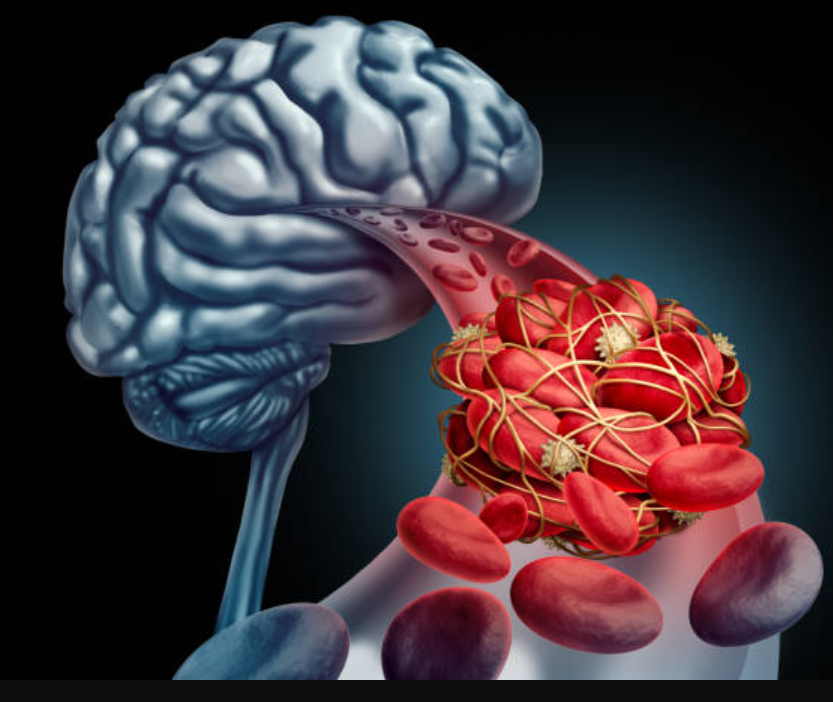
A brain aneurysm is a small, balloon-like bulge that forms in the wall of a blood vessel in the brain. It develops at a point where the vessel wall has become weaker than normal. Many aneurysms are small and cause no problems, while others may grow over time or, less commonly, leak or burst.
How a brain aneurysm forms
The walls of healthy blood vessels are strong and even. If one area of the wall becomes weak, the constant pressure of blood flowing through the vessel can cause that spot to stretch and bulge outward, much like a weak spot on the inner tube of a tyre. This bulge is the aneurysm. In most cases it grows slowly and silently, which is why many are never noticed. The main concern is that a thin, stretched wall can, in some cases, tear and bleed.
Types of brain aneurysms
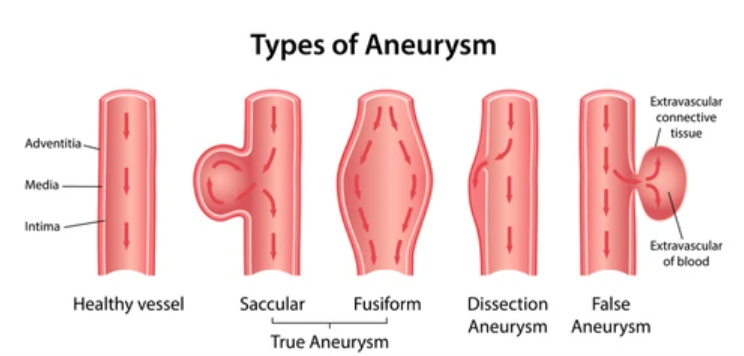
Brain aneurysms are usually grouped by their shape:
- Saccular (berry) aneurysm — a rounded pouch that balloons out from one side of a vessel, attached by a narrow neck. This is the most common type.
- Fusiform aneurysm — a widening of the vessel all the way around, rather than a pouch on one side.
- Dissecting aneurysm — caused by a tear in the inner lining of the vessel wall, which allows blood to track into the wall itself.
How common are brain aneurysms?
Brain aneurysms are more common than many people realise. A small proportion of the general population carries an unruptured aneurysm without ever knowing it, and most of these never cause symptoms. Knowing that they are relatively common is meant to inform rather than alarm — the majority are discovered by chance and are simply monitored over time.
Symptoms and warning signs
How a brain aneurysm forms
Most aneurysms that have not burst cause no symptoms at all. They are frequently found by chance during a scan carried out for an unrelated reason, such as a headache investigation or after a head injury. When an aneurysm is found this way, it does not necessarily mean treatment is needed; it means the situation can be assessed calmly and a plan made.
Thunderclap headache — the most important warning sign
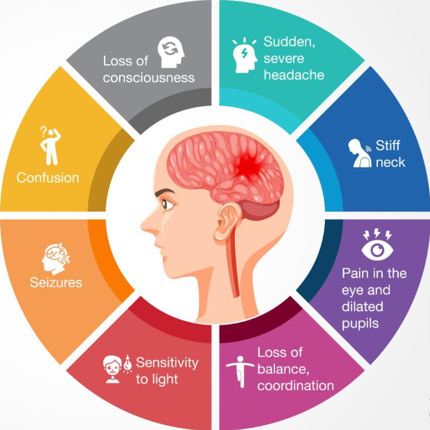
The single most important warning sign is a sudden, extremely severe headache that reaches its peak within seconds. People often describe it as the worst headache of their life, and unlike anything they have felt before. This can be a sign that an aneurysm has bled and requires emergency medical attention immediately.
Other symptoms to be aware of
Less commonly, a larger aneurysm can press on nearby structures and cause warning signs even before any bleeding. These can include:
- Pain above or behind one eye
- A drooping eyelid
- Changes in vision, such as blurred or double vision
- A stiff neck
Common risk factors
Certain factors can increase the chance of developing an aneurysm or of an existing one becoming a problem. Knowing them is useful for general awareness.
High blood pressure
Persistently raised blood pressure puts extra strain on blood vessel walls over time, which can contribute to the formation of an aneurysm and to its risk of bleeding.
Smoking
Smoking is strongly linked to both the development of aneurysms and a higher risk of rupture. It is one of the most significant factors a person can change.
Family history of aneurysms
Having a close relative who has had a brain aneurysm can modestly increase a person’s own risk, which is why family history is always worth mentioning to a doctor.
Certain inherited conditions
A few inherited conditions affecting blood vessels or connective tissue — such as polycystic kidney disease — are associated with a higher chance of aneurysms.
How brain aneurysms are diagnosed
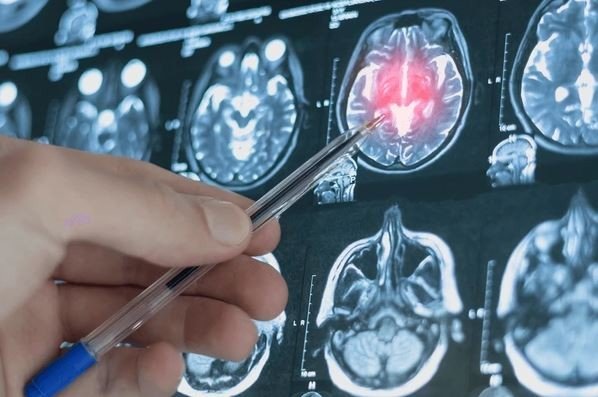
Aneurysms are diagnosed using imaging that shows the brain’s blood vessels in detail. The choice of scan depends on the situation.
1. CT angiography (CTA)
A CT scan combined with a contrast dye injected into a vein. It produces detailed pictures of the blood vessels quickly, which makes it especially useful in emergencies.
MRI and MR Angiography
A scan that uses a magnetic field rather than X-rays to map the blood vessels. It can often be done without dye and is frequently used to look for or monitor unruptured aneurysms.
Digital subtraction angiography (DSA)
Considered the most detailed test for blood vessels. A thin catheter is guided to the brain’s arteries and contrast dye is injected while X-ray images are taken. It gives the clearest picture and is often used when fine detail is needed to plan treatment.
Treatment approaches for brain aneurysms
There is no single treatment that suits every aneurysm. The right approach depends on the size, shape, and location of the aneurysm, whether it has bled, and the person’s overall health. The options below are explained for understanding only; any decision is made together with the treating team.
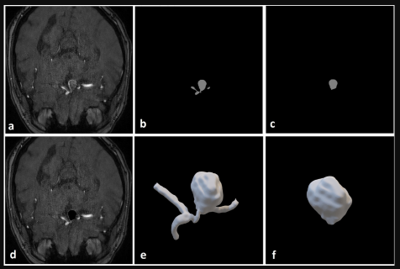
Observation and monitoring — for small, low-risk aneurysms
Many small, unruptured aneurysms carry a low risk and do not need active treatment. Instead, they are watched over time with periodic scans to check whether they are changing. Controlling blood pressure and stopping smoking are often part of this plan.
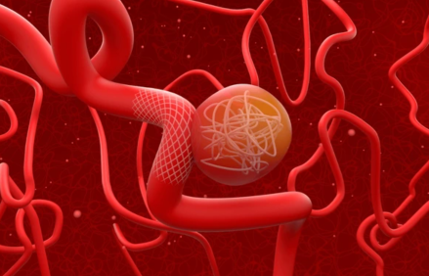
Endovascular coiling — how it works
This is a minimally invasive approach carried out from inside the blood vessel. A thin catheter is guided through the arteries to the aneurysm, and soft platinum coils are gently placed inside the bulge. The coils encourage the blood within the aneurysm to clot, which seals it off from the normal flow without open surgery.
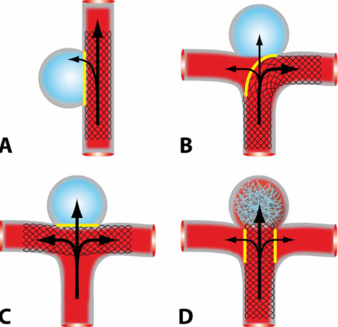
Flow diverter devices — how they work
A flow diverter is a fine, stent-like mesh tube placed in the main vessel across the neck of the aneurysm. Rather than filling the aneurysm, it redirects blood flow along the normal vessel and away from the bulge, allowing the aneurysm to gradually close off and heal over time.
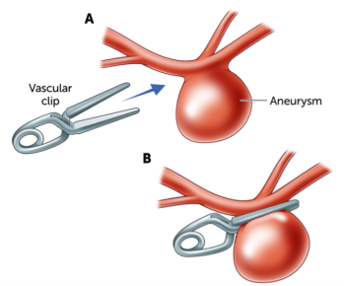
Surgical clipping — when it may be considered
Clipping is an open surgical option in which a small metal clip is placed across the neck of the aneurysm to stop blood from entering it. It may be considered for certain aneurysms depending on their shape and location, and is one of several approaches a team may weigh up.
When to seek immediate medical attention
Some signs may indicate that an aneurysm has bled, which is a medical emergency. Seek emergency care without delay if there is:
- A sudden, severe headache that reaches full force within seconds
- Loss of consciousness, even briefly
- A seizure with no known cause
- A sudden stiff neck, often with sensitivity to light
- Sudden vision changes, confusion, or weakness
These symptoms need emergency assessment immediately. For an aneurysm found by chance, or for ongoing concerns, speak to a specialist.
Frequently Asked Question
Does having a brain aneurysm always mean it will burst?
No. Most brain aneurysms never burst. Many are small, cause no symptoms, and are simply monitored over time. The risk of rupture depends on factors such as the size, shape, and location of the aneurysm, which is why each one is assessed individually.
Can a brain aneurysm be detected before it causes problems?
Yes. Many unruptured aneurysms are found by chance on scans done for other reasons, such as headaches or after a head injury. When found this way, the situation can be assessed calmly, and not every aneurysm needs active treatment.
What is the most important warning sign of a ruptured aneurysm?
A sudden, extremely severe headache that reaches full intensity within seconds — often described as the worst headache of one’s life — is the most important warning sign. It needs emergency medical attention immediately.
Is treatment for a brain aneurysm always surgery?
Not necessarily. Options range from monitoring small, low-risk aneurysms, to minimally invasive approaches such as coiling or flow diverters carried out from inside the blood vessel, to open surgical clipping. The right choice depends on the individual case and is decided by the treating team.
Can anything reduce the risk of an aneurysm causing harm?
Managing general risk factors helps. Keeping blood pressure under control and not smoking are among the most important steps. These are general awareness points; a doctor can advise on what is appropriate for an individual.