Carotid and Vertebral Artery Disease — What You Need to Know
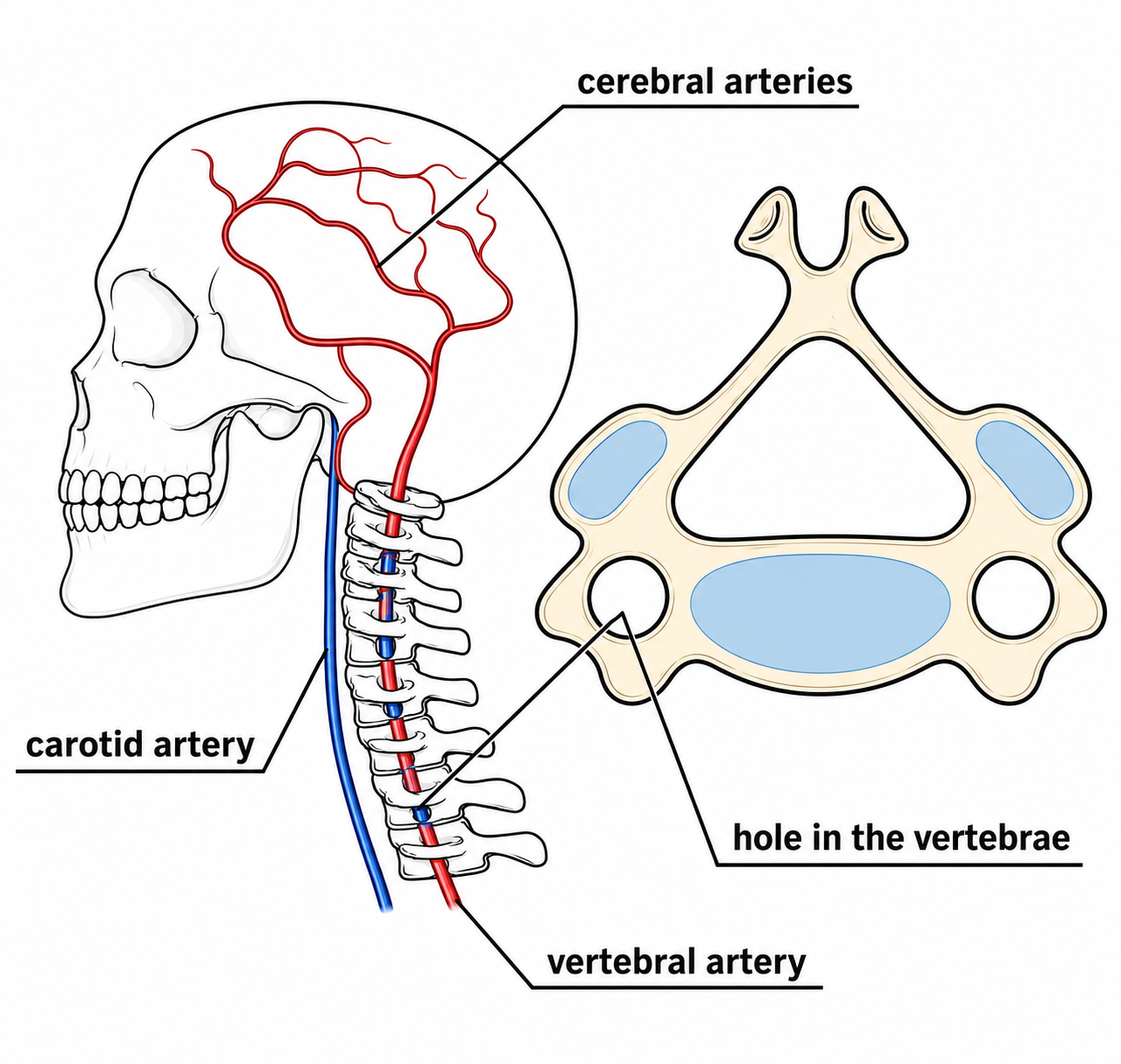
The brain gets its blood supply through about four main arteries in the neck: you have the two carotid arteries up front, and the two vertebral arteries in the back. Carotid and vertebral artery disease means there is a narrowing along those vessels, so the blood can’t move as well to the brain. Since these are basically the brain’s main supply routes, a trouble with them is one of the most important, and often preventable, causes of stroke.
The arteries that supply the brain
The carotid arteries, run up on either side of the front of the neck and they feed the big frontal parts of the brain. The vertebral arteries travel up through the spine along the back of the neck and mostly support the rear portion of the brain, plus the brainstem which in turn steers many basic functions. When the arteries stay healthy and open, there’s a steady flow of blood that can reach all those zones.
How narrowing develops (atherosclerosis)
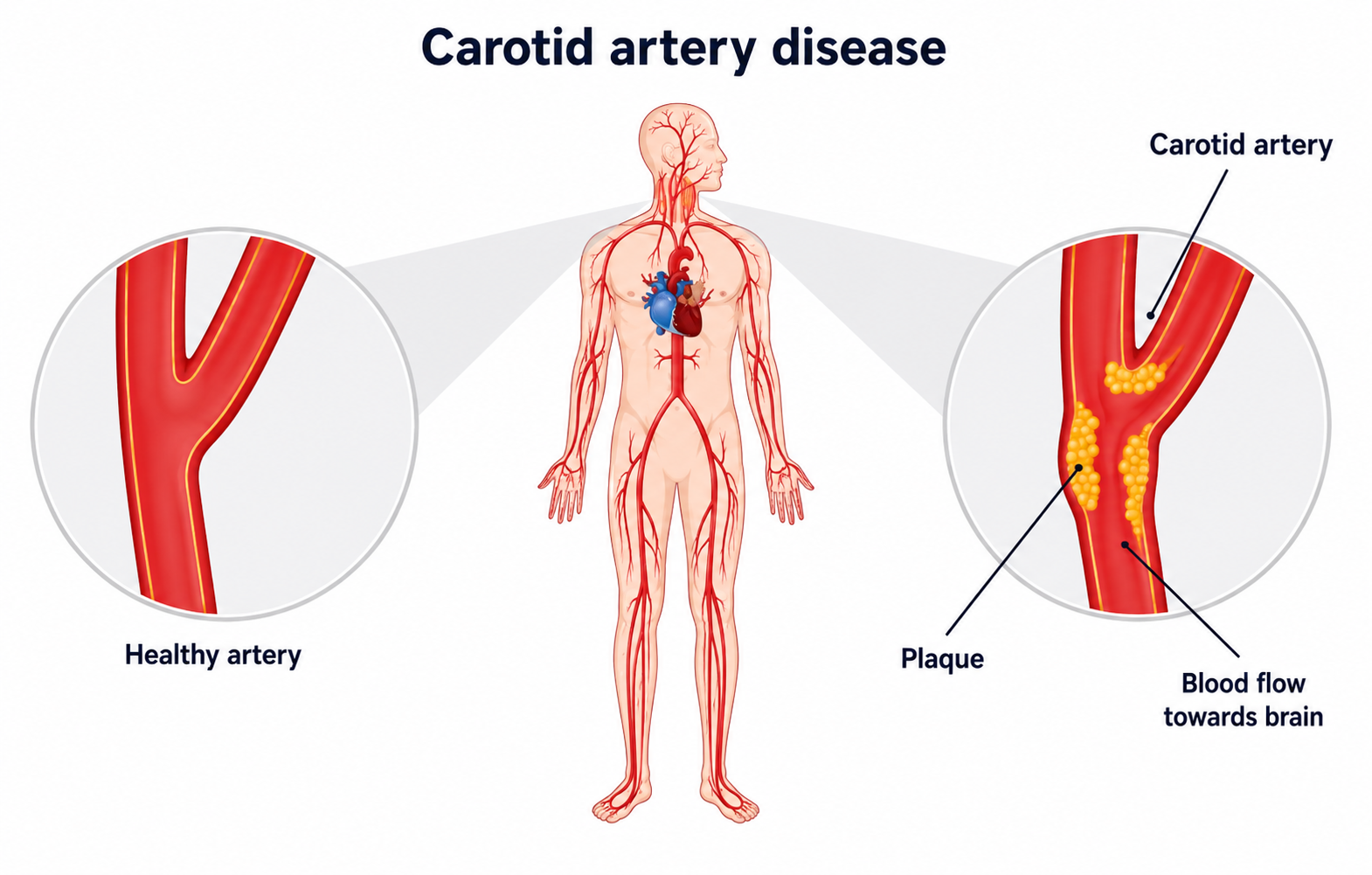
A lot of the time the reason for narrowing is atherosclerosis, a slow buildup of greasy deposits, they’re called plaque, along the inner side of the artery wall. Over the years these plaque deposits can get thicker and feel more rigid, so the space, or channel, where blood goes through gets smaller. That actual narrowing gets named stenosis, pretty straightforward, though.
Why narrowing raises stroke risk
A narrowed artery can cause a stroke in two main ways, I mean, it does it like first by cutting down the blood flow to the brain. But also it can turn into a kind of origin for tiny clots or little plaque fragments that break off and then ride along, finally getting stuck in a smaller vessel, right there in the brain. That’s also why catching and dealing with this narrowing early really matters so much.
Symptoms and warning signs
Often no symptoms until a warning event
Narrowing of the neck arteries frequently causes no symptoms at all and may be found only during tests done for another reason. In some cases, the first sign is a TIA or stroke, which is why awareness of the warning signs matters.
TIA — a temporary warning sign
A transient ischemic attack, or TIA, causes stroke-like symptoms that pass within a short time and leave no lasting damage. It is an important warning that a stroke could follow, and it needs prompt medical assessment even after the symptoms have gone.
Sudden weakness, speech, or vision changes
Sudden weakness or numbness on one side of the body, difficulty speaking or understanding speech, or sudden vision changes can all be signs that blood flow to the brain has been interrupted. These should be treated as an emergency.
Temporary loss of vision in one eye
A brief, painless loss of vision in one eye — sometimes described as a curtain or shade coming down — can be a warning sign linked to narrowing of a carotid artery, and should be assessed promptly.
Dizziness or balance problems (vertebral)
Because the vertebral arteries supply the back of the brain, narrowing here can sometimes cause dizziness, unsteadiness, double vision, or problems with balance and coordination.
Common risk factors
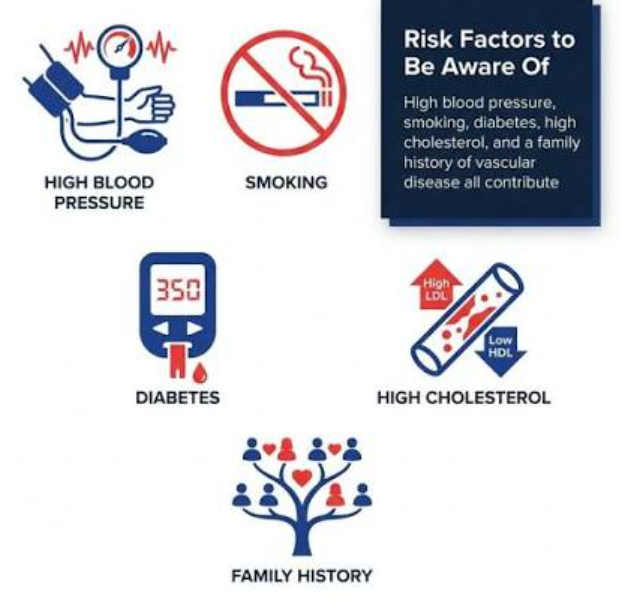
The factors that lead to narrowing of the neck arteries are largely the same as those for heart disease and stroke, and many can be managed.
High blood pressure and high cholesterol
Both put strain on artery walls and contribute directly to the build-up of plaque, making them central risk factors.
Smoking
Smoking damages the lining of the arteries and accelerates the narrowing process. It is one of the most significant factors a person can change.
Diabetes
Diabetes contributes to damage of the blood vessels over time and increases the likelihood of narrowing.
Age and family history
The risk of artery narrowing rises with age, and a family history of vascular disease can also play a part.
How the condition is diagnosed
Narrowing of the neck arteries is assessed using imaging that shows the arteries and how much blood is flowing through them. The choice of test depends on the situation.
Carotid ultrasound (Doppler)
A painless scan that uses sound waves to look at the carotid arteries and measure the speed of blood flowing through them. It is often the first test used because it is quick and involves no radiation or dye.
CT angiography (CTA)
A CT scan with contrast dye that produces detailed images of the neck and brain arteries, showing clearly where and how much an artery is narrowed.
MR angiography (MRA)
A scan that maps the arteries using a magnetic field rather than X-rays, providing another detailed view of the narrowing.
Digital subtraction angiography (DSA)
The most detailed test for the arteries, in which a thin catheter is used to inject contrast dye while X-ray images are taken. It is generally reserved for situations where very precise information is needed.
Treatment approaches
Treatment depends on how narrowed the artery is, whether it has already caused symptoms, and the person’s overall health. Not everyone with narrowing needs a procedure. The options below are explained for understanding only; any decision is made together with the treating team.
Medical management and lifestyle
For many people, especially those with milder narrowing, the main focus is on managing risk factors: controlling blood pressure, cholesterol, and diabetes, stopping smoking, and taking any medication a doctor prescribes to reduce the chance of clots. This approach aims to slow the narrowing and lower stroke risk.
Carotid artery stenting — how it works
This is a minimally invasive approach carried out from inside the artery. A thin catheter is guided to the narrowed section, a small balloon may be used to open it, and a small mesh tube called a stent is placed to hold the artery open and keep blood flowing. It is done without open surgery on the neck.
Carotid endarterectomy — when it may be considered
This is an open surgical operation in which the surgeon removes the plaque from inside the carotid artery. It is a long-established approach that may be considered for certain patients depending on the degree of narrowing and their overall health, and is one of several options a team may weigh up.
When to seek immediate medical attention
Some signs may indicate that blood flow to the brain has been interrupted, which is a medical emergency. Seek emergency care without delay if there is:
- Sudden weakness or numbness on one side of the body
- Sudden difficulty speaking or understanding speech
- Sudden loss or blurring of vision, including in one eye
- Sudden dizziness, loss of balance, or difficulty walking
- A sudden, severe headache with no known cause
These symptoms need emergency assessment immediately, even if they pass quickly. For narrowing found on a test, or for ongoing concerns, speak to a specialist.
Frequently Asked Question
What is the difference between the carotid and vertebral arteries?
The two carotid arteries run up the front of the neck and supply the large front parts of the brain, while the two vertebral arteries run up the back of the neck and mainly supply the back of the brain and the brainstem. Together they are the brain’s main blood supply, and narrowing in any of them can affect blood flow to the brain.
Why does narrowing of a neck artery cause stroke?
A narrowed artery can reduce blood flow to the brain, and it can also become a source of small clots or fragments of plaque that break off and travel to the brain, blocking a smaller vessel. Both routes can lead to a stroke, which is why early identification matters.
Can artery narrowing be present without any symptoms?
Yes. Narrowing often causes no symptoms and may be discovered only during tests done for another reason. In some cases the first sign is a TIA or stroke, which is why knowing the warning signs is important.
Does everyone with narrowed arteries need a procedure?
No. Many people, especially those with milder narrowing, are managed mainly by controlling risk factors such as blood pressure, cholesterol, diabetes, and smoking, along with prescribed medication. Whether a stenting or surgical procedure is appropriate depends on the individual case and is decided by the treating team.
Can this condition be prevented?
Many cases are linked to factors that can be managed, such as high blood pressure, high cholesterol, diabetes, and smoking. Managing these, staying active, and attending regular check-ups can help lower the risk. These are general awareness points; a doctor can advise on what is right for an individual.